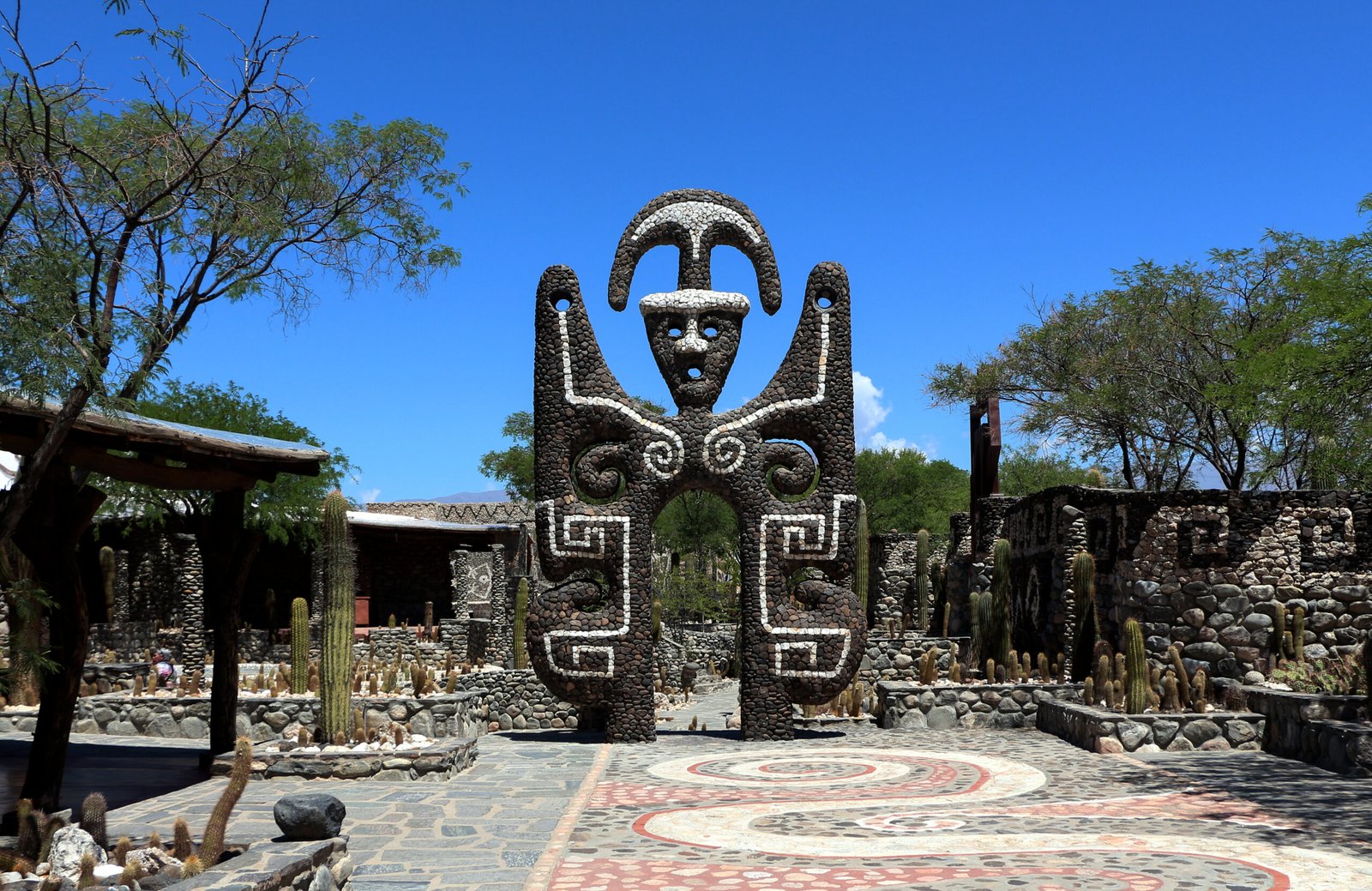
Pachamama: The Andean Earth Mother
Pachamama is a revered deity in the cultures of the Andes, particularly in countries such as Peru, Bolivia, Ecuador, and parts of northern Argentina and Chile. Often referred to as Mother Earth, Pachamama is more than a symbolic figure—she is a living, sacred presence that nurtures, sustains, and governs the natural world. In recent years, the spiritual traditions centred on Pachamama have gained renewed global attention, especially as more people seek to reconnect with nature, ancestral wisdom, and plant medicines like ayahuasca and huachuma.
In this article, we explore the etymology, meaning, cultural history, and mythology of Pachamama, along with her relevance in today’s world.
Etymology of the Word “Pachamama”
The word Pachamama originates from the Quechua language, the traditional tongue of the Inca Empire, which is still spoken by millions across the Andes.
- “Pacha” means world, earth, time, or cosmos. It is a multidimensional word, connoting not only the material world but also space-time, existence, and the universe itself.
- “Mama” means mother.
So, Pachamama is most accurately translated as Mother World, Mother Universe, or Mother Earth-Time. This duality is important: Pachamama is not just the soil under our feet, but also the force behind cycles, changes, life, and death.
In Aymara, another language of the Andes, the word retains a similar meaning and reverence.
The Meaning and Role of Pachamama
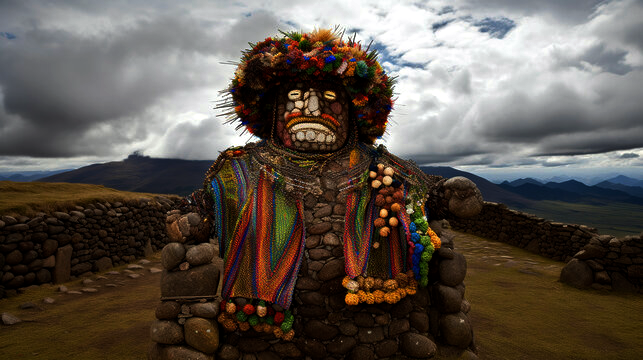
To the Andean people, Pachamama is not a metaphor. She is a real, sentient force. She is both goddess and ground, spirit and soil, embodying all that gives life and takes it back again. She is both the provider and the womb from which all existence springs.
Unlike modern Western concepts of “nature” as a resource, Pachamama is considered a sacred being. Every mountain (Apu), every stream, and every harvest is seen as a gift from her. When humans are in harmony with Pachamama, they flourish. When they are not, illness, misfortune, and imbalance arise.
Pachamama is also a symbol of balance — between humanity and the environment, between life and death, and between the spiritual and physical worlds.
The History of Pachamama Worship
Pre-Inca and Inca Civilisations
The veneration of Pachamama predates the Inca Empire, with archaeological evidence pointing to earth-based spiritual practices among earlier Andean cultures such as the Tiwanaku and Wari civilisations. The Inca, however, incorporated and systematised her worship within their vast religious framework.
The Inca cosmology divided the universe into three realms: – Hanan Pacha – the upper world (heavens, home of gods like Inti (the Sun)) – Kay Pacha – the middle world (the earthly realm of humans and nature) – Uku Pacha – the lower world (underworld, where the dead and ancestors dwell)
Pachamama spans Kay Pacha and Uku Pacha. She is rooted in the underworld but extends into the present, living realm.
Colonial Suppression and Syncretism
With the arrival of Spanish conquistadors and Catholic missionaries in the 16th century, traditional spiritual practices were aggressively suppressed. Many shrines and ceremonies dedicated to Pachamama were destroyed or outlawed, which is why it is hard to find ancient representations of her.
However, many local communities preserved their traditions by integrating them into Christian symbols. Pachamama was sometimes associated with the Virgin Mary. This syncretism allowed her veneration to survive through covert rituals, even in colonised settings.
Today, Pachamama ceremonies are legally protected in countries like Bolivia and Peru, and her importance is officially recognised in national constitutions and Indigenous rights laws.
Rituals and Offerings to Pachamama
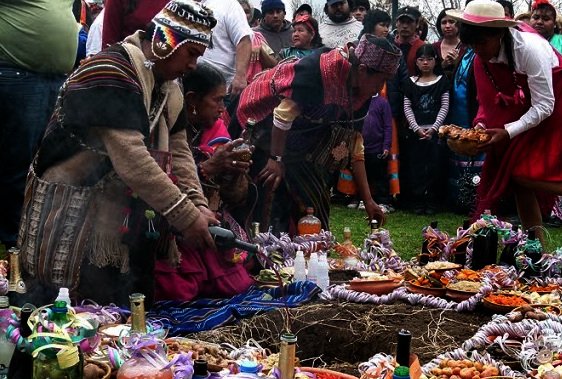
One of the most enduring practices in honour of Pachamama is the “Despacho” ceremony — a sacred offering composed of natural items like coca leaves, corn, flowers, sweets, wine, and even llama fat. These items are arranged in intricate mandala-like patterns and offered back to the earth as a gesture of gratitude and communion with her.
The first day of August (August 1st) is traditionally Pachamama Day, when people across the Andes give thanks to the Earth through offerings and rituals. On this day, people bury food and drink in the soil, feed the earth with chicha (fermented corn beer), and burn offerings.
Folklore and Mythology
Pachamama is deeply woven into Andean folklore, often portrayed not just as a nurturing mother but also as a powerful, sometimes punishing force. If disrespected—through over-farming, pollution, or spiritual neglect—she may cause earthquakes, droughts, or crop failures.
According to some, her home is in Cerro Blanco (Nevado de Cachi), and it is said that at the summit, there is a lake that surrounds an island inhabited by a bull with golden antlers that emits storm clouds from its mouth when it roars.
She is often described as being a woman of very short stature, with a big head and large feet, who usually wears a brimmed hat and huge sandals. She lives in the hills and is often accompanied by a very brave black dog. The serpent is her lasso, and the armadillo (quirquincho), her pig. She is also described as sometimes carrying leather flasks filled with gold and silver. Just like nature itself, she can also be temperamental. If she likes someone, then she favours them. If she does not, she can be spiteful and vengeful, sending thunder and storms to express her displeasure and take her revenge.
Here are a few of the other most important mythological motifs and beliefs, which are connected with Pachamama:
The Plumed Serpent, the Jaguar, and the Condor
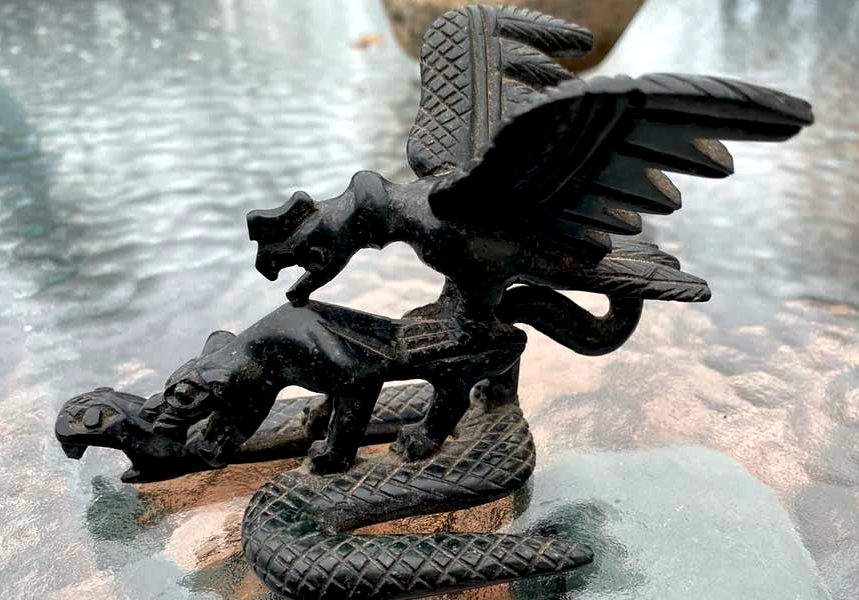
These three animals symbolise the three realms of Andean cosmology and are often associated with Pachamama’s full cycle. ThePlumed Serpent (Amaru) is a symbol of the underworld and ancient wisdom. The Jaguar (Otorongo) embodies strength, courage, and the physical world, and the Condor (Kuntur) is a messenger between this earth and the heavens.
Together, they reflect the spiritual journey of transformation—a central theme in many modern plant medicine ceremonies linked to Pachamama’s energy. This journey of transformation is also why the modern symbol for Pachamama is an outwardly moving spiral with three dots on its outer tail. The spiral reminds us that it is our inner journey that guides us, while the three dots represent the balanced natural cycle of the snake, the jaguar, and the condor (the underworld, the earth, and the heavens).
The Apu Spirits and Mountain Guardians
In many myths, Pachamama works in harmony with the Apus — sacred mountain spirits. Together, they protect the land and its people. Some believe Pachamama dwells within the mountain’s womb, while the Apu watches from its peak.
The Andean Duality
In Andean thought, duality, balance, and interdependence are central principles. Pachamama is balanced by Taita Inti (Father Sun), and life emerges when masculine and feminine, sun and earth, come together in sacred union.
Pachamama Now
Today, Pachamama has become a symbol of environmentalism, resilience, and spiritual reconnection. She is honoured not only in remote Andean villages but also in retreats around the world, holistic communities, and environmental activism.
As interest in ayahuasca, huachuma, and plant medicine grows, more and more people are learning about Pachamama—not just as a cultural icon, but as a vital consciousness that supports deep healing, recovery, balance, and transformation.
In a time of environmental crisis and spiritual searching, Pachamama offers a powerful reminder: We are not separate from the Earth—we are part of her. The stories, rituals, and reverence that surround her are not relics of the past—they are urgently needed wisdom for our future, as individuals and a species.
Whether through offerings, mindfulness, plant medicine, or being environmentally aware, honouring Pachamama is a step toward remembering our place in the great web of life.
